
Currently Empty: $0.00

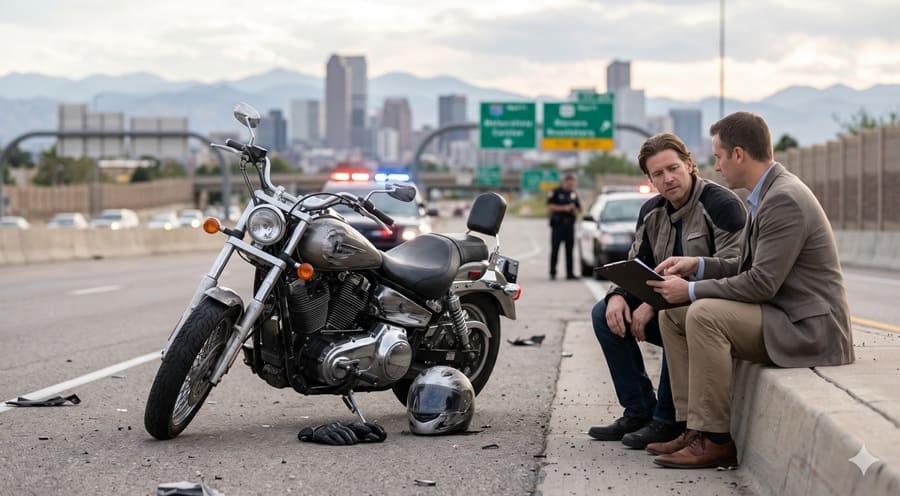
Motorcycle Accident Claims in Denver: What Injured Riders Should Know
By Brian D. Pushchak, Pushchak Law Firm, Denver · Colorado Attorney Reg. No. 43705 | Updated November 2026
A motorcycle crash can leave a rider with serious injuries, medical bills nobody planned for, and an insurance claim that gets harder the longer it goes on. Without a car’s frame around them, riders are far more likely than drivers to be badly hurt in the same collision. And once the hospital stay is over, many injured riders find the legal side- who pays, how much, and by when, is its own fight.
Quick answer: In Colorado, an injured rider can recover damages as long as they were less than 50% at fault, with the award reduced by their share of fault. Most lawsuits over motor vehicle crashes must be filed within three years. If a city, county, or state road defect played a role, a written notice is due within 182 days.
How a Motorcycle Accident Claim Works
A motorcycle accident claim seeks compensation from the person or company whose carelessness caused the crash. That might be a driver, a trucking company, a business that left debris in the road, or, less often, a government agency responsible for a dangerous roadway.
The center of every claim is fault. The rider generally has to show that someone else was negligent and that the negligence caused the crash and the injuries. Riders also face a problem drivers don’t: an assumption, sometimes from adjusters and sometimes from jurors, that the motorcyclist was speeding or reckless. This look at why motorcyclists are so often blamed for crashes explains how that bias shows up and how evidence counters it.
Common Causes of Motorcycle Crashes
Many crashes happen because a driver misjudges a motorcycle’s speed and distance or doesn’t see it at all. The most common patterns include:
- Left turns: a driver turns across the rider’s path at an intersection
- Lane changes: a driver merges into a rider in a blind spot
- Failure to yield: at stop signs, driveways, and parking lot exits
- Distracted driving: phones and in-car screens
- Rear-end impacts: a driver doesn’t stop behind a rider in traffic
Road conditions matter more on two wheels. Potholes, loose gravel, construction debris, and uneven pavement that a car rolls over can put a motorcycle on the ground. Since August 7, 2024, Colorado has also allowed lane filtering: a rider may pass between stopped vehicles at 15 mph or less, but not on the shoulder or into oncoming traffic, and must rejoin traffic when it starts moving. Lane splitting through moving traffic is still illegal, and insurers will look closely at whether a rider who was filtering followed every condition.
Important Steps After a Motorcycle Crash
What you do in the first days affects both your recovery and your claim. Get medical care first, even if you feel fine; concussions and internal injuries often don’t show symptoms right away, and a gap in treatment is one of the first things an insurer points to.
When it’s safe, photograph the scene, your bike, the other vehicle, and your injuries. Get names and phone numbers from witnesses, exchange insurance information, and report the crash to police so there’s an official record. Keep your helmet and riding gear as they are; damage to them can show the force and direction of impact.
Afterward, keep copies of medical records, treatment plans, repair estimates, and every crash-related expense. Those records are what prove the financial side of the claim.
What Compensation Can Cover
What a claim is worth depends on the injuries, the financial losses, the insurance available, and how the crash happened. Injured riders can seek compensation for medical care, rehabilitation, lost wages, and reduced earning ability. Depending on the facts, compensation can also cover pain, emotional distress, and the loss of activities the rider can no longer do.
Colorado limits that last category. For lawsuits filed on or after January 1, 2025, the cap on noneconomic damages, such as pain and suffering, rose to $1.5 million, with inflation adjustments starting in 2028. There is no cap on economic losses such as medical bills and lost income. Future medical needs and permanent limitations are often the largest part of a serious claim, so they need to be documented by treating doctors before any settlement.
Dealing With Insurance Companies
Insurance negotiations get difficult when the insurer disputes fault, questions how serious the injuries are, or offers a settlement that doesn’t match the documented losses. Be careful about agreeing to a recorded statement or a quick settlement. Once you sign a final release, you generally can’t reopen the claim, even if the injury turns out worse than expected. These tips on dealing with insurers after a motorcycle crash cover what to say and what to hold back.
Your own policy often matters as much as the other driver’s. Colorado’s minimum liability limits are low compared with the cost of a serious motorcycle injury, so check whether you carry uninsured/underinsured motorist coverage and medical payments coverage. Insurers must offer both, and a rider who didn’t reject them in writing may have more coverage than they realize. If health insurance pays your bills, it may later claim reimbursement from your settlement, and the terms of that claim are often negotiable.
A Left Turn on a Green Light and a Health Insurer’s Claim
One case on the firm’s published results page shows how both problems can come up at once. A rider was going through a green light when a driver turned left in front of him, and he was thrown over the vehicle and badly hurt. The claim resolved for $125,000 before trial. His health insurer then demanded the entire settlement as reimbursement for what it had paid. The firm challenged that demand, and the client ultimately paid the insurer nothing. Past results do not guarantee a similar outcome, and every case depends on its own facts.
Colorado Laws That Affect Motorcycle Claims
- Comparative fault: Under R.S. § 13-21-111, a rider can recover only if their own negligence is less than that of the party being sued, and the award is reduced by the rider’s percentage of fault. At 50%, recovery is barred.
- Filing deadline: R.S. § 13-80-101 generally allows three years to sue over injuries from a motor vehicle crash. Other claims, such as some product defect claims, can have shorter deadlines.
- Government defendants: If a road defect maintained by the state, a county, or a city contributed to the crash, the Colorado Governmental Immunity Act generally requires written notice within 182 days of discovering the injury.
- Helmets and eye protection: Under R.S. § 42-4-1502, riders and passengers under 18 must wear a helmet, and all riders need eye protection unless their helmet provides it. Adults aren’t required to wear helmets, but insurers may still argue that a lack of protective gear made injuries worse.
Getting Advice on a Denver Motorcycle Claim
A motorcycle claim involves more than deciding who caused the crash. Medical records, proof of fault, insurance coverage, reimbursement claims, and deadlines all affect the outcome. When injuries are serious, fault is disputed, or the insurer stops negotiating in good faith, a Denver motorcycle accident lawyer can review the evidence, identify every available policy, and explain the options before anything is signed. Knowing those options early lets an injured rider focus on recovery without giving up rights by mistake.
Disclaimer: This article provides general information about Colorado motorcycle accident claims and is not legal advice. Reading it does not create an attorney-client relationship. Laws, caps, and deadlines change, and every case turns on its own facts, so speak with a licensed Colorado attorney about your situation. Past results do not guarantee a similar outcome in any future matter.
