
Currently Empty: $0.00

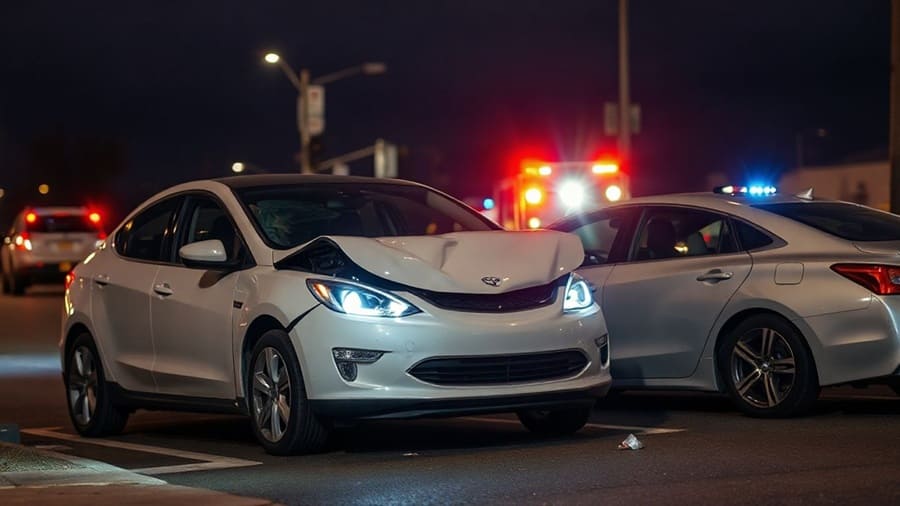
What Happens If a Self-Driving Car Crashes Into You?
By John Fuller, Founder and Managing Attorney, Fuller Personal Injury Law
Self-driving cars are showing up on more roads every year, and while the technology is designed to reduce human error, it hasn’t eliminated crashes. If one hits you, the accident itself may look ordinary — but figuring out who’s responsible rarely is. Here’s what actually changes when the at-fault vehicle wasn’t being driven by a person, and what to do if it happens to you.
Who Can Be Held Liable in a Self-Driving Car Accident
A traditional car accident usually comes down to one driver’s negligence. A self-driving car crash can implicate several different parties at once, and which one applies depends entirely on what caused the crash:
- The manufacturer. If a defect in the vehicle’s hardware or software caused the crash, the company that built the car may be liable under product liability law.
- The software developer. When the manufacturer and the company behind the autonomous driving system aren’t the same entity, a flaw in the driving software specifically can point liability toward the developer rather than the automaker.
- The owner or operator. A human who was supposed to supervise the system and failed to intervene when required can still be held responsible — the autonomous features don’t erase a driver’s own duty of care.
- Other road users. A driverless vehicle can also be the victim rather than the cause; another driver, cyclist, or pedestrian can still be the party at fault.
Many manufacturers have stated they’ll cover damages their autonomous systems cause, which is a meaningful shift from traditional personal-injury claims. But stating a policy and proving in a specific case that a defect caused the crash are two different things, and that gap is usually where a claim gets contested.
What Colorado Law Actually Says
Colorado has a specific statute addressing this, and it’s worth knowing before assuming the rules are the same as an ordinary crash. Under C.R.S. § 42-4-242, an automated driving system can legally operate on Colorado roads without a human at the controls, as long as it’s capable of complying with the same state and federal laws that apply to human drivers. If it can’t, the operator needs approval from the Colorado State Patrol and CDOT before testing it publicly — operating without that approval is a class B traffic infraction.
On liability specifically, the statute doesn’t create a special new framework: it states that liability for a crash involving an automated driving system “is determined in accordance with applicable state law, federal law, or common law.” In practice, that means an accident involving a driverless car in Colorado still gets analyzed through ordinary negligence and product liability principles — the statute confirms those rules apply, rather than replacing them with something AV-specific.
Is the Human in the Seat Still Responsible?
Often, yes. Many autonomous systems on the road today aren’t fully self-driving — they require a human to stay alert and take over in certain situations. If the system called for that handoff and the person in the seat wasn’t paying attention, their inaction can be treated as ordinary negligence, separate from anything the vehicle’s technology did or didn’t do correctly. Understanding exactly what a specific vehicle’s system is designed to do — and what it explicitly requires of the human occupant — often matters as much as the crash data itself.
How Safe Are Self-Driving Cars, Really?
The honest answer is: it depends heavily on which system and which dataset you’re looking at, and comparisons between autonomous and human-driven crash rates carry real methodological caveats. Since 2021, manufacturers and operators of automated driving systems have been required to report qualifying crashes to NHTSA within one to five days under the agency’s Standing General Order on Crash Reporting — a reporting requirement that doesn’t apply to ordinary human-driven fender-benders, which makes direct rate comparisons trickier than they first appear.
Large-scale studies of the most heavily deployed systems have generally found lower crash and injury rates than human-driver benchmarks — analyses covering tens of millions of autonomous miles have reported fewer police-reported and injury-involved crashes per mile than comparable human driving. But “self-driving car” isn’t one uniform product, and track records vary significantly between companies. In October 2023, California suspended a major robotaxi operator’s permits after one of its vehicles struck and dragged a pedestrian, and the company was found to have withheld footage of the incident from regulators — a reminder that safety performance isn’t interchangeable across manufacturers, even when the underlying technology sounds similar.
Technology Risks Beyond the Crash Itself
Autonomous vehicles depend on sensors, cameras, and software working together correctly, and each of those is a potential point of failure. A sensor can misread an object, software can behave unpredictably in an edge case it wasn’t trained for, and — because these vehicles are effectively computers on wheels — they’re also a cybersecurity target. These aren’t hypothetical concerns; they’re part of why crash investigations increasingly involve pulling data logs from the vehicle itself, not just a police report.
A Brief History of How This Has Played Out
Autonomous vehicle incidents aren’t new, and a few have shaped how the industry and regulators think about safety:
- February 2016: A Google self-driving test vehicle sideswiped a public bus in Mountain View, California, after both the vehicle and its test driver incorrectly assumed the bus would yield. It was the first crash Google’s program acknowledged its own vehicle had caused.
- March 2018: A self-driving Uber test vehicle struck and killed a pedestrian in Tempe, Arizona — the first fatality involving a fully autonomous test vehicle. Federal investigators later found the system failed to correctly classify the pedestrian as she crossed outside a crosswalk.
- October 2023: California regulators suspended a robotaxi operator’s permits in San Francisco after one of its vehicles dragged a pedestrian who had first been struck by a hit-and-run driver.
Steps to Take After Being Hit by a Driverless Car
- Get medical attention first, even if you feel fine — some injuries don’t show symptoms right away, and a prompt medical record ties any injury directly to the crash.
- Document everything you can. Photograph all vehicles involved, the scene, and any visible sensor damage on the autonomous vehicle. Note whether it appeared to be operating in autonomous mode.
- Get witness information. Independent accounts matter more in these cases, not less, given how technical the rest of the investigation tends to get.
- Preserve the idea of data logs. The vehicle’s own systems may have recorded exactly what it was doing in the moments before impact — this is something an attorney can help formally request before it’s lost.
- Talk to an attorney before dealing with insurance. Multiple companies may be involved — the owner’s insurer, the manufacturer’s, potentially the software developer’s — and each has an incentive to point at someone else.
For those injured in the Denver metro area, a Denver car accident lawyer who has handled multi-party insurance disputes can help identify every available source of coverage rather than settling with the first insurer that responds.
How This Plays Out in Practice
The following is a composite illustration based on the type of multi-party dispute personal injury attorneys commonly see when more than one insurer is involved in a claim. Identifying details have been altered to protect confidentiality.
A pedestrian was struck by a vehicle operating in a partially autonomous mode after the system failed to detect her stepping off a curb. The vehicle’s insurer initially argued the human occupant should have intervened and offered a low settlement reflecting shared fault. An attorney requested the vehicle’s data logs, which showed the automated system had control at the time of impact and that the alert requiring human takeover hadn’t triggered until after the collision began. With that evidence, the claim was renegotiated for a settlement several times the original offer, without needing to pursue the manufacturer separately.
While Fuller Personal Injury Law’s published case results don’t yet include an autonomous vehicle claim specifically, the firm has repeatedly handled the same underlying challenge these cases present: collecting from multiple insurers who each try to minimize their own exposure. In one case, the firm collected four times an insurer’s original offer after the at-fault driver’s policy limits weren’t enough to cover the damages; in another, it recovered $200,000 after an insurer had made no settlement offer at all before the firm got involved. That pattern — untangling which party actually pays, and how much — is precisely what autonomous vehicle claims require, just with an additional defendant or two in the mix.
The Bottom Line
Getting hit by any vehicle is stressful, and a driverless one adds a layer of complexity that most people have never had to navigate. Fault might rest with the manufacturer, the software developer, the human occupant, or another driver entirely — sometimes more than one at once. Get medical care first, document as much as you can, and get an attorney involved early enough to preserve the technical evidence these cases tend to turn on.
Disclaimer
This article is for general informational purposes only and does not constitute legal advice. Autonomous vehicle laws and safety data are evolving rapidly and vary by state. Consult a licensed attorney to evaluate the specific facts of your situation.
Authorities & Sources
- R.S. § 42-4-242 — Colorado’s automated driving systems statute
- NHTSA Standing General Order on Crash Reporting for ADS and Level 2 ADAS — National Highway Traffic Safety Administration
