
Currently Empty: $0.00

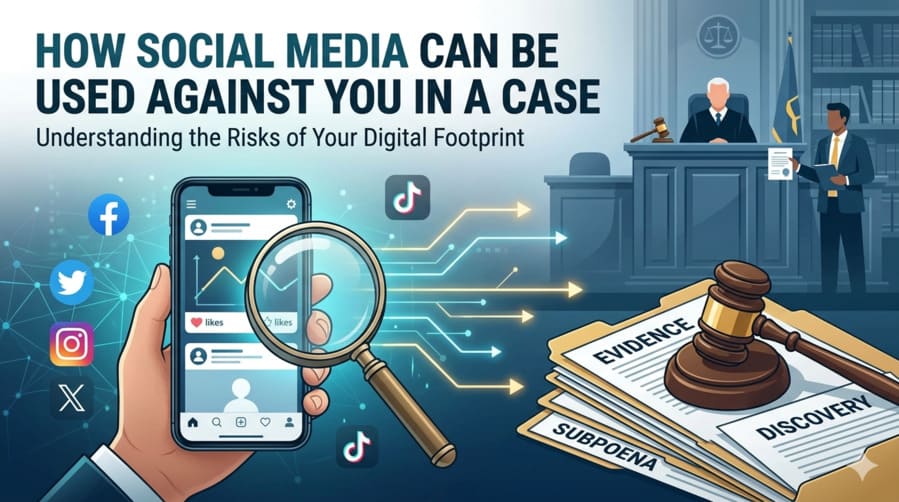
How Social Media Can Be Used Against You in a Maryland Case
After an arrest, most people focus on what they said to the police. However, what they posted online can be just as damaging, sometimes even more so. In many Maryland criminal cases, prosecutors and investigators review social media activity to build their narrative of what happened.
Whether it is a years-old post, a recent story, or a private message sent late at night, your digital footprint can follow you into the courtroom. Social media accounts often contain timestamps, location data, photos, and conversations that investigators may use as evidence. Understanding how this information is collected and used can help you avoid mistakes that make a difficult situation worse.
How Maryland Prosecutors Access Social Media
Investigators often start with what is already publicly available. If a profile, comment, or photo is publicly viewable, law enforcement can usually obtain it without a warrant.
Social media evidence is commonly obtained in several ways:
● Public posts: Anything publicly visible can be saved and used as evidence.
● Subpoenas or court orders: Private posts, messages, and account records may be obtained through legal process directed at the platform.
● Requests to social media companies: Platforms such as Meta, TikTok, and Snapchat may provide certain user data in response to lawful requests.
● Screenshots from others: Friends, witnesses, or the alleged victim may provide investigators with screenshots of messages or posts.
Because so much communication now happens online, social media often becomes part of a criminal investigation early in the process.
What Types of Social Media Content Can Hurt Your Case?
Not every post will matter in a criminal case, but certain types of content appear frequently in police reports and courtroom exhibits.
Examples include:
● Posts showing prior conflict: Threats, arguments, or hostile exchanges with the alleged victim before the incident.
● Location data or check-ins: Tagged locations or geotagged photos that place you near the scene.
● Photos and videos: Images showing aggressive behavior, weapons, or events tied to the alleged offense.
● Posts made after the incident: Comments that appear to discuss, celebrate, or justify what happened.
Even casual posts can be interpreted differently in court. A message written in frustration or sarcasm may be presented as evidence of intent or hostility.
Can Deleted Posts Still Be Used Against You?
Many people assume that deleting a post solves the problem. In reality, deleting content after an arrest or the start of an investigation can create additional legal issues.
First, the content may already exist elsewhere. Someone may have saved a screenshot or downloaded the video before it was removed.
Second, social media companies retain user data for certain periods of time. Investigators can sometimes obtain previously deleted posts through lawful requests to the platform.
Third, intentionally deleting evidence after you become aware of an investigation can raise allegations of obstruction or evidence tampering. In some cases, the act of deletion itself becomes part of the prosecution’s argument.
For these reasons, it is important not to remove posts, messages, or photos without speaking with your attorney first.
What About the Other Side—Can Social Media Help Your Defense?
Social media not only helps prosecutors. In some cases, it can also strengthen a defense.
Posts from the alleged victim or witnesses may contradict their version of events. Photos, timestamps, and location tags can also support an alibi or clarify the timeline of an incident.
Examples of potentially helpful information include:
● Posts that conflict with statements given to police
● Location tags that place someone elsewhere during the incident
● Photos or videos showing events before or after the alleged crime
● Witness posts describing what they observed
A defense attorney may review multiple accounts and posts to reconstruct the timeline of events and identify inconsistencies in the prosecution’s theory.
What You Should (and Shouldn’t) Do on Social Media After an Arrest
Continuing to post online after an arrest can create serious problems in a criminal case. Even indirect comments may later appear in court.
Consider the following guidelines.
Do:
● Set all social media accounts to private immediately.
● Tell close friends and family not to discuss your case online.
Do not:
● Delete posts or messages without speaking with your attorney.
● Post about the incident, the alleged victim, or your arrest.
● Contact the alleged victim through any platform.
● Ask friends to communicate with the alleged victim on your behalf.
Anything shared online can eventually become part of the evidence in a criminal case.
How a Maryland Defense Attorney Uses Digital Evidence
Digital evidence plays an increasingly important role in criminal defense strategy. A careful review of social media accounts often begins early in the case.
An attorney may evaluate:
● Whether investigators obtained social media evidence through proper legal procedures
● Whether posts have been taken out of context
● Whether the prosecution can properly authenticate the content in court
● Whether other posts contradict the prosecution’s theory of the case
Screenshots alone do not always prove who created a post or when it was written. Defense attorneys often examine metadata, timestamps, and account ownership to challenge investigators’ assumptions.
If you are facing assault allegations, speaking with an Annapolis assault defense attorney early in the process can help ensure that both the risks and opportunities surrounding digital evidence are fully evaluated.
Your Online Activity Can Become Courtroom Evidence
Social media has become part of everyday life. In criminal cases, it has also become part of the evidentiary record.
Posts, messages, and photos can reveal timelines, relationships, and statements that prosecutors may use to support their claims. At the same time, those same digital records may contain information that challenges the allegations or supports a defense.
The most important step after an arrest is understanding that your online activity matters. What you posted months ago, and what you choose to post today, may both shape how your case unfolds in court.
